Site Preferences


Follow Us


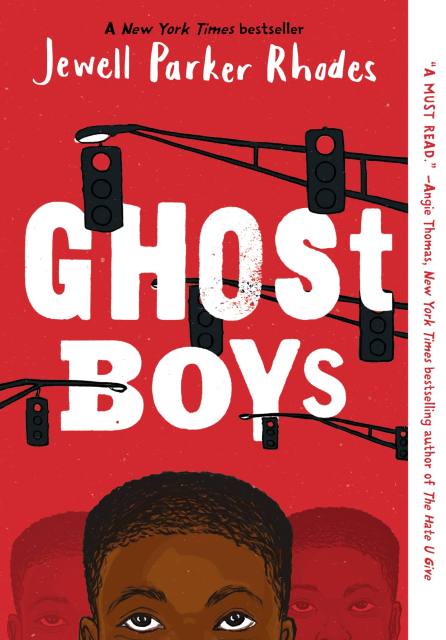
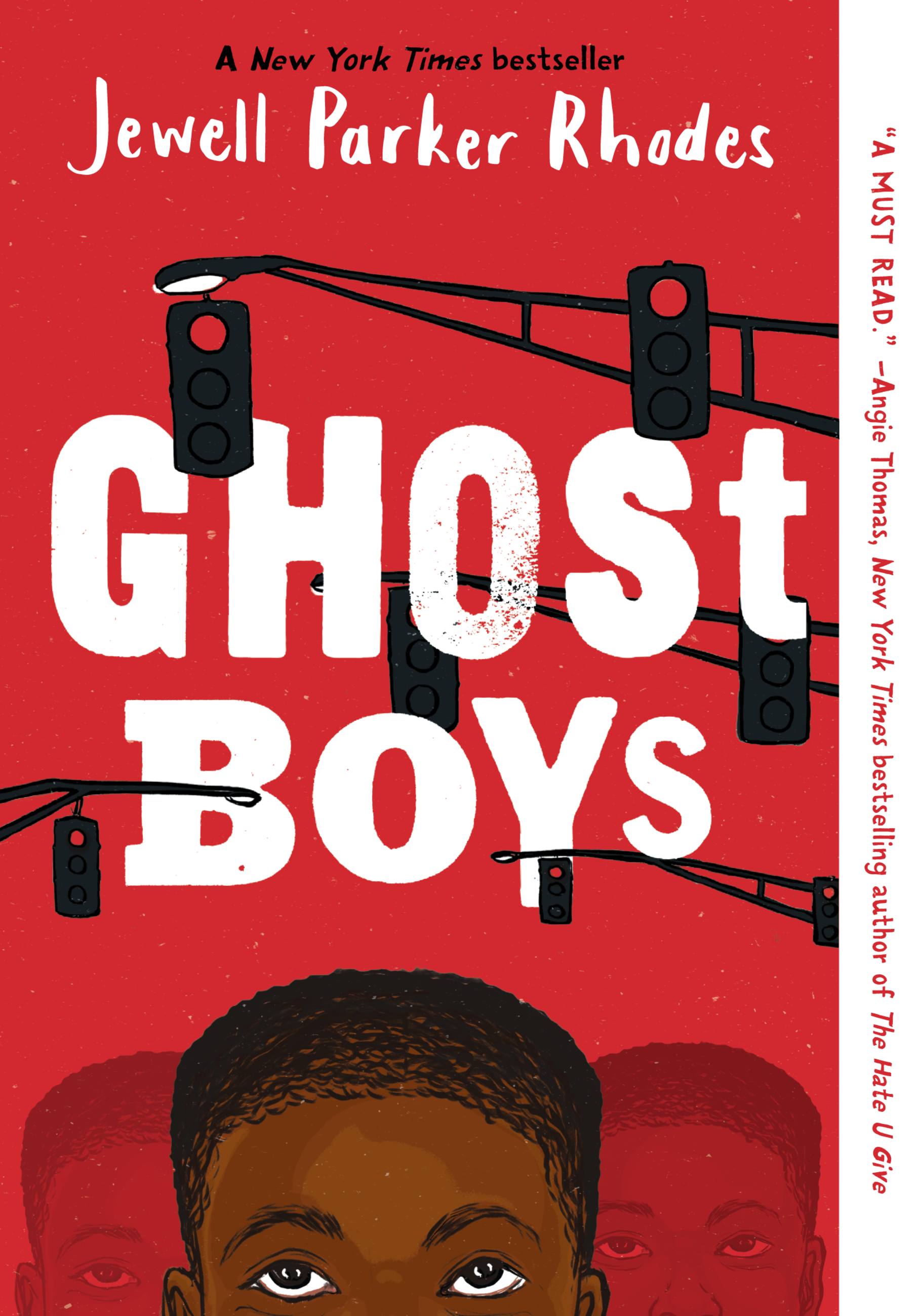
Ghost Boys
Contributors
Formats and Prices
- On Sale
- Sep 10, 2019
- Page Count
- 240 pages
- Publisher
- Little, Brown Books for Young Readers
- ISBN-13
- 9780316262262
- Age Range
- 10–99
Price
$8.99Price
$11.99 CADFormat
Format:
This item is a preorder. Your payment method will be charged immediately, and the product is expected to ship on or around September 10, 2019. This date is subject to change due to shipping delays beyond our control.
Buy from Other Retailers:
A heartbreaking and powerful novel about a black boy killed by a police officer, drawing connections through history, from award-winning author Jewell Parker Rhodes.
Only the living can make the world better. Live and make it better.
Twelve-year-old Jerome is shot by a police officer who mistakes his toy gun for a real threat. As a ghost, he observes the devastation that’s been unleashed on his family and community in the wake of what they see as an unjust and brutal killing.
Soon Jerome meets another ghost: Emmett Till, a boy from a very different time but similar circumstances. Emmett helps Jerome process what has happened, on a journey towards recognizing how historical racism may have led to the events that ended his life. Jerome also meets Sarah, the daughter of the police officer, who grapples with her father’s actions.
Once again Jewell Parker Rhodes deftly weaves historical and socio-political layers into a gripping and poignant story about how children and families face the complexities of today’s world, and how one boy grows to understand American blackness in the aftermath of his own death.
Genre:
-
Praise for Ghost Boys:
A New York Times BestsellerAn IndieBound BestsellerThe #1 Kids' Indies Next PickA 2018 Nerdies List BookAn ALA 2019 Children's Notables List Pick
-
"This was one of my most anticipated 2018 books and I was not disappointed. A must read."Angie Thomas, the #1 New York Times bestselling author of The Hate U Give
-
* "Rhodes captures the all-too-real pain of racial injustice and provides an important window for readers who are just beginning to explore the ideas of privilege and implicit bias."School Library Journal, starred review
-
* "An excellent novel that delves into the timely topic of racism... with the question of whether or not we really have come far when dealing with race relations."School Library Connection, starred review
-
"In writing that's spare and powerful, Rhodes takes us into the hearts and minds of those who are left behind, and then out into a vast and luminous world where ghost boys wander among the living, pursuing their mysterious mission. Rhodes has achieved something remarkable here: a kid's-eye-view of violence and racism that balances innocence and outrage, wrenching loss and hard-won hope."Chicago Tribune
-
"A timely, challenging book that's worthy of a read, further discussion, and action."Kirkus Reviews
-
"[A] potent story that deserves to be read."VOYA
-
"Ghost Boys is powerful in prose, and so important at this time. I hope parents will read this book to their children."The Monitor
-
"Written beautifully...an important novel."WCMU Public Radio
-
"Unblinkingly confronts challenging perspectives and the mutability of truth."Shelf Awareness
-
Additional praise and awards for Jewell Parker Rhodes' books:
Ninth Ward was named a Coretta Scott King Author Honor Book, a Notable Book for a Global Society, a CCBC Choices pick, a VOYA Top Shelf Fiction pick, an ALSC Notable Children's Book, an SLJ Best Book of the Year, an IndieBound Kids' Next List pick, a Parents' Choice Gold Award recipient, and an NYPL Top 100 Title for Reading & Sharing.
Sugar was a Junior Library Guild selection, a Kirkus Best Book of the Year, an IndieBound Kids' Next List pick, a Jane Addams Book Award winner, an IRA Top Chapter Books selection, and a CCBC Choices Pick.
Bayou Magic was an LA Times summer reading selection and a Center for the Study of Multicultural Children's Literature Best Books selection.
Towers Falling was an Indiebound Kids' Next List selection, a Junior Library Guild selection, one of Amazon's Best Books of the Month, a Notable Social Studies Trade Book for Young People, a Seventeen Magazine Best Book of the Year, and a Notable Book for a Global Society. -
"Rhodes deftly showcases how much power and intellectual understanding our kids have in building a more inclusive society.”Book Riot
You May Also Like
Discussion Questions
- How did you react to the beginning of Ghost Boys?
- Rhodes writes Ghost Boys largely in short, blunt sentences. Why do you think she chose to write the book in this style? What effect does it have on your reading experience?
- In what ways does Ghost Boys connect the past and the present? How, and why, does the book jump backwards and forwards in time?
- What was the importance in showing the preliminary hearings?
- What is racial bias, and how does it affect the story of Ghost Boys, and real events?
- Many people have interpreted Black Lives Matter as an “anti-police” movement. Does Ghost Boys strike you as an anti-police book? How does the book portray Officer Moore, and police in general?
- What did you know about Black Lives Matter and the civil rights movement before reading Ghost Boys? How did that inform your reading of the book? What have you learned about these movements through the book?
- Why does Ghost Boys reference Peter Pan?
- How does Jerome’s experience of being bullied affect his sense of self and his relationships with family members?
- What is the purpose in Sarah’s character, and her having the ability to see Jerome? What does she symbolize?
- What about Carlos’s character? What role does the Day of the Dead play in Ghost Boys?
- How does the spirituality of Día de los Muertos connect to Grandma’s (and Kim’s) understanding of death?
- Why is it important that Carlos admits to giving Jerome the toy gun?
- Who was Emmett Till? How does his real story affect the story Ghost Boys, and what is the significance in Emmett Till telling Jerome his story?
- What does the author mean by “Even though life ends, it also doesn’t end” (p.146)?
- Why does Emmett Till tell Jerome, “Bear witness”? What does “bear witness” mean?
- Jerome’s grandmother frequently asks others to “tell me three good things.” Track the repetition of this motif throughout the novel. What does it reveal about Grandma, Jerome, and other characters? When does it reappear and what are the relationships between those scenes?
- The author writes, “Can’t undo wrong. Can only do our best to make things right.” What is the significance of this? What are some ways that you can make things right?
- Jerome notes that Emmett’s attackers were found innocent, just like Officer Moore. What is the significance of this?
- Why haven’t the ghost boys said goodbye?
- What does the author mean by “Only the living can make the world better. Live and make it better”? What are the ways you can make the world better?
- What did you think of Ghost Boys? How did it make you feel?
- How do you think Ghost Boys might affect the way you see other people, America, and the world?
Preguntas de discusión
- ¿Cómo reaccionaste al comienzo de la lectura de Los chicos fantasmas?
- Rhodes redacta Los chicos fantasmas con frases breves y claras. ¿Por qué crees que decidió escribir el libro con este estilo? ¿Qué efecto tiene en tu experiencia de lectura?
- ¿De qué manera conecta Los chicos fantasmas el pasado y el presente? ¿Cómo y por qué el libro salta hacia delante y hacia atrás en el tiempo?
- ¿Cuál era la importancia de mostrar las vistas preliminares?
- ¿Qué es el prejuicio racial, y cómo afecta la historia de Los chicos fantasmas y eventos de la vida real? (Página 86–87).
- Muchas personas han interpretado el movimiento Black Lives Matter (Las vidas de los negros importan) como un movimiento “antipolicía”. ¿Te parece Los chicos fantasmas un libro antipolicía? ¿Cómo retrata el libro al oficial Moore, y a la policía en general?
- ¿Qué sabías sobre el movimiento Black Lives Matter y el movimiento por los derechos civiles antes de leer Los chicos fantasmas? ¿Cómo informó eso tu lectura del libro? ¿Qué has aprendido sobre estos movimientos a lo largo del libro?
- ¿Por qué Los chicos fantasmas hace referencia a Peter Pan? (Página 100).
- ¿Cómo afecta la experiencia de Jerome de sufrir acoso escolar su sentimiento del yo propio y de sus relaciones con sus familiares?
- ¿Cuál es el propósito en el personaje de Sarah, y en tener la capacidad de ver a Jerome? ¿Qué simboliza ella?
- ¿Y el personaje de Carlos? ¿Qué papel desempeña el Día de los Muertos en Los chicos fantasmas?
- ¿Cómo conecta la espiritualidad del Día de los Muertos con la comprensión de la muerte que tienen la abuela y Kim?
- ¿Por qué es importante que Carlos admita haberle dado a Jerome la pistola de juguete?
- ¿Quién era Emmett Till? ¿Cómo afecta su historia real a Los chicos fantasmas, y cuál es la importancia de que Emmett Till cuente a Jerome su historia?
- ¿Qué quiere decir la autora con la frase: “Aunque la vida termina, no termina”? (Página 157).
- ¿Por qué le dice Emmett Till a Jerome: “Da testimonio” (Página 173)? ¿Qué significa “dar testimonio”?
- La abuela de Jerome pide frecuentemente a otras personas: “Dime tres cosas buenas”. Sigue la pista a la repetición de este tema a lo largo de la novela. ¿Qué revela sobre la abuela, Jerome y otros personajes? ¿Cuándo reaparece, y cuáles son las relaciones entre esas escenas?
- La autora escribe: “No se puede deshacer lo malo. Solo podemos hacer todo lo posible para arreglar las cosas” (página 189). ¿Cuál es el significado de eso? ¿Cuáles son algunas maneras de poder arreglar las cosas?
- En la página 198, Jerome observa que declararon inocentes a los atacantes de Emmett, igual que al oficial Moore. ¿Cuál es el significado de esto?
- ¿Por qué no se han despedido los chicos fantasmas? (Página 207).
- ¿Qué quiere decir la autora con la frase: “Solo los vivos pueden hacer que el mundo sea mejor. Vive y mejóralo”? (Página 228). ¿De qué maneras puedes mejorar el mundo?
- ¿Qué te pareció Los chicos fantasmas? ¿Cómo te hizo sentir?
- ¿Cómo crees que Los chicos fantasmas podría afectar el modo en que ves a otras personas, a los Estados Unidos y el mundo?